Under the reformed funding architecture managed by Skills England, the Financial Services Customer Adviser Level 3 Apprenticeship (ST0185 Version 2.0) carries a maximum funding band of £11,000.
For financial services employers—from regional building societies and challenger banks to tier-one institutions and insurance operations—understanding how this funding band operates is the key to maximising your Apprenticeship Levy account before funds expire.
How the £11,000 Funding Band Works
Funding bands set the maximum amount of money the UK government will permit an employer to draw from their Digital Apprenticeship Service (DAS) account for a single apprentice.
With ST0185 v2.0 effective from 27 July 2026, the funding dynamics break down into two categories:
1. Levy-Paying Employers (Annual Payroll > £3 Million)
- Cost to Business: £0 direct cash outflow. 100% of the negotiated fee up to £11,000 is drawn from your monthly Digital Apprenticeship Service (DAS) levy funds.
- Monthly Drawdown: The training provider receives 80% of the total cost distributed evenly across the 18-month planned duration (approx. £488 per month per apprentice), with the final 20% (£2,200) withheld as a completion payment upon passing the End-Point Assessment.
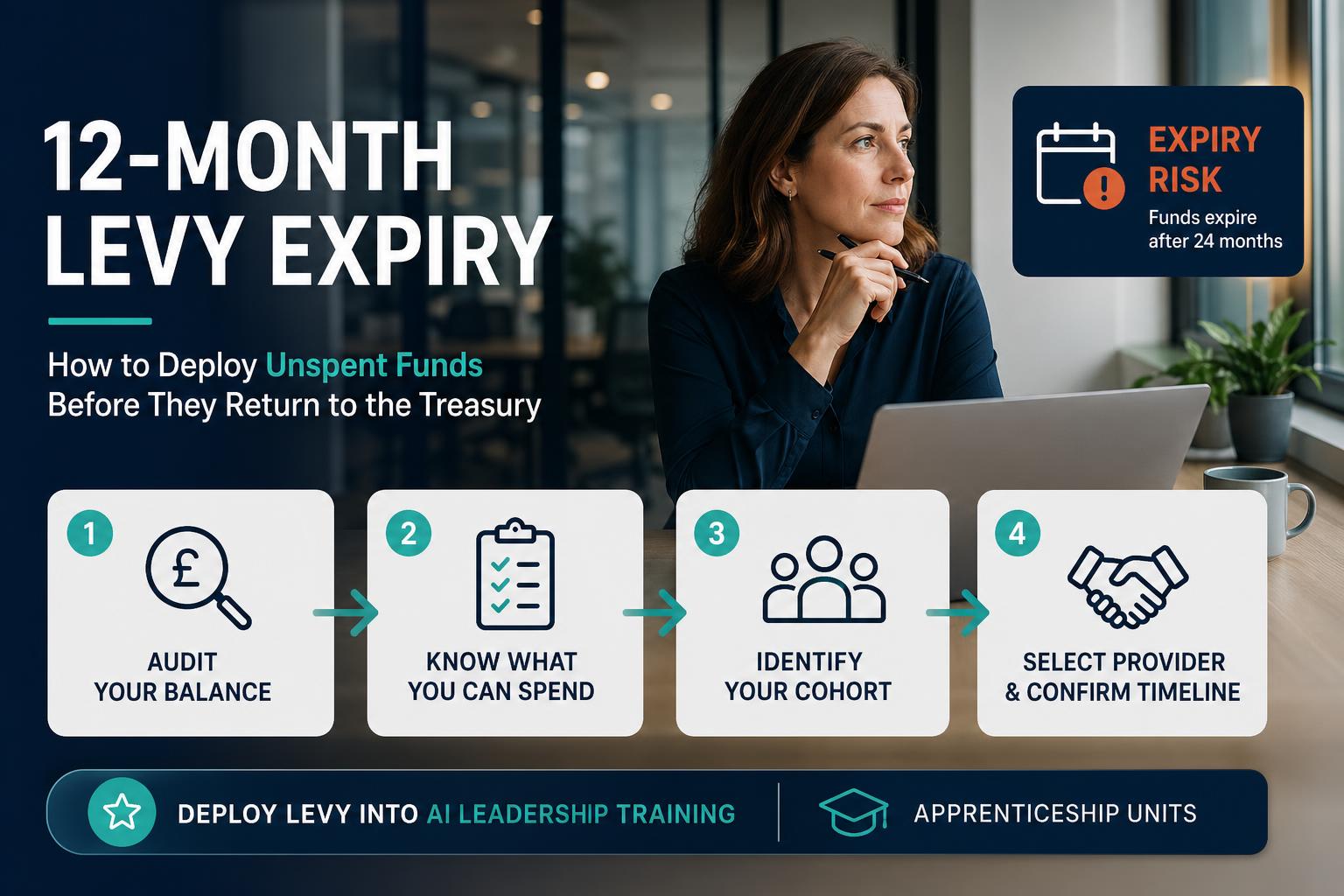
- Expiring Funds Urgency: Under 2026 Growth and Skills Levy reforms, unspent funds now expire on a rolling 12-month clawback schedule. Deploying cohorts into ST0185 directly prevents cash from returning to HM Treasury.
2. Non-Levy Employers (Annual Payroll ≤ £3 Million)
- Co-Investment Rate: Employers pay just 5% of the agreed training fee. For an £11,000 programme, this equals a total employer contribution of only £550 per adviser.
- Government Contribution: The UK government funds the remaining 95% (£10,450) directly to the training provider.
Cohort Economics: Sizing 20 to 100 Person Rollouts
When rolling out training across distributed branches or high-volume customer contact centres, the commercial leverage of the £11,000 band becomes substantial:
| Cohort Size | Total Programme Value | Levy Account Drawdown | Non-Levy Cash Cost (5%) |
|---|---|---|---|
| 20 Advisers | £220,000 | £220,000 from levy | £11,000 total |
| 50 Advisers | £550,000 | £550,000 from levy | £27,500 total |
| 100 Advisers | £1,100,000 | £1,100,000 from levy | £55,000 total |
What Happens if an Employee Leaves the Business?
Frontline contact centre turnover is a major concern for workforce planners. Fortunately, UK apprenticeship funding rules protect the employer:
- If an apprentice resigns or leaves during their 18-month programme, monthly levy drawdown stops on the exact date of withdrawal recorded in the Individualised Learner Record (ILR).
- There is no penalty, no clawback, and no obligation to repay past funding already drawn. The employer only pays for the months the employee was actively trained.
What Can and Cannot Be Funded?
The ESFA funding rules are explicit regarding eligible spend:
- Eligible: Off-the-job training delivery, mentor coaching, learning materials, AI simulation and practice environments, ePortfolio systems, and independent End-Point Assessment fees.
- Ineligible: Employee wages, company induction days, hardware/laptops, general line manager salaries, or travel expenses.
Summary: Maximise Your 2026 Financial Services Levy
With approximately only ten training providers currently approved nationally for ST0185, securing dedicated cohort capacity early is essential.
To see how TIQPlus structures cohort rollouts and AI simulations within the £11,000 funding band, read our comprehensive Financial Services Customer Adviser Level 3 Employer Guide.
Frequently asked questions
How does the £11,000 maximum funding band work?
Under Skills England rules for standard ST0185 Version 2.0, £11,000 is the upper limit government will co-fund or allow an employer to draw down from their Digital Apprenticeship Service (DAS) levy account. If an agreed provider price is £11,000, 100% of eligible training and assessment costs are paid from the employer's levy balance.
What does the employer pay if they are a non-levy payer?
Non-levy employers (annual payroll under £3 million) pay a 5% government co-investment rate. For an £11,000 standard, this equates to exactly £550 per apprentice, with the remaining £10,450 paid directly to the provider by the government.
Can the apprenticeship levy cover travel, laptops, or apprentice wages?
No. Apprenticeship funding rules strictly prohibit using levy funds or government co-investment for wages, laptops, physical hardware, travel, or overheads. Funding can only be spent on direct off-the-job training, curriculum resources, coaching, and End-Point Assessment fees.