Last updated: 1 November 2026
Executive Summary
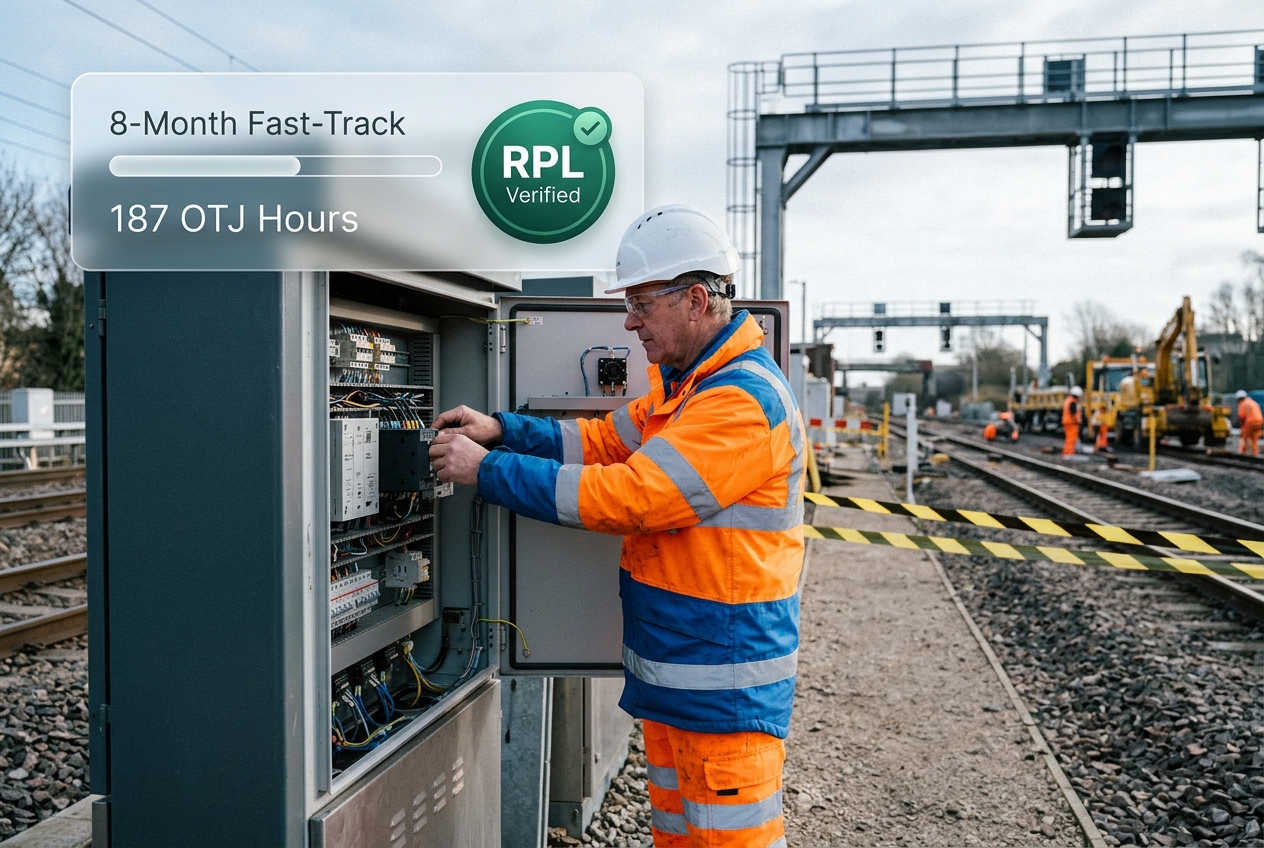
For nearly a decade, the rigid 12-month minimum apprenticeship duration prevented employers from using their levy to upskill experienced technicians, team leaders, and career-switchers who only needed 8 to 10 months of targeted training. With the statutory minimum duration now reduced to 8 months (and a minimum floor of 187 Off-the-Job training hours), a massive commercial opportunity has opened for agile training providers. In this guide, we provide an interactive RPL & 8-Month Fast-Track Calculator and show how to audit-proof accelerated cohorts.
1. Why the 8-Month Minimum Changes Employer Demand
Before the 8-month rule change, training providers faced a painful Catch-22 whenever an employer wanted to enrol an experienced worker with partial prior competence:
- If a 14-month standard was reduced by 35% for Recognition of Prior Learning (RPL), the adjusted duration fell to 9.1 months.
- Under the old 12-month floor, that learner became completely ineligible for apprenticeship funding—forcing providers either to turn away the business or to artificially pad the programme out to 12 months (risking an ESFA RPL clawback).
Lowering the statutory floor to 8 months (and 187 OTJ hours) solves this paradox overnight. Providers can now legitimately enrol experienced site operatives, healthcare workers, and newly promoted managers onto honest, high-velocity 8-to-10-month fast-track programmes.
2. Interactive Calculator: 8-Month RPL Price, Duration & 187-Hour Floor Checker
Use the interactive calculator below to test whether an accelerated learner meets the 8-month duration floor and the 187-hour OTJ floor, and calculate the mandatory DfE funding band reduction:
8-Month Fast-Track & RPL Price Reduction Simulator
3. The Absolute Floor: 8 Months & 187 OTJ Hours
When designing an 8-to-11-month accelerated cohort, two statutory red lines must never be crossed:
- Calendar Duration Floor: The practical period (from `LearnStartDate` to `LearnActEndDate`) must be at least 8 calendar months. If an apprentice reaches Gateway at 7 months and 24 days, 100% of completion funding is blocked.
- The 187-Hour OTJ Floor: Regardless of how much prior learning is recognised, the learner must require and complete at least 187 hours of eligible Off-the-Job training during the practical period.
4. Evidencing RPL with Voice & Photo Skills Scans
When an auditor sees an 8-month or 9-month apprenticeship in your ILR, it immediately triggers an RPL sample check. If your only evidence of prior learning is a self-reported 1–5 slider tick-sheet where the learner rated themselves "4 out of 5," the auditor will challenge the validity of the assessment.
In TIQPlus, accelerated learners substantiate their onboarding Skills Scan using QuickSnap & Voice Baseline Evidence—uploading 3 photos of past work and a 60-second technical voice explanation during induction. This gives auditors irrefutable proof of which KSBs were genuinely held at Day 1 and which KSBs justify the remaining 8-month training plan.
5. The New Rule for Part-Time Apprentices
Alongside the 8-month minimum duration, the updated funding rules abolished the old rigid formula that forced providers to automatically extend the minimum duration for part-time workers (e.g., someone working 20 hours a week in health and social care or retail).
As long as the part-time apprentice completes at least 8 months on programme and achieves the full planned Off-the-Job training hours for their standard, they can progress to Gateway without an artificial multi-year calendar extension.
"The drop from a 12-month to an 8-month minimum apprenticeship duration (187 OTJ hours floor) is the biggest commercial unlock for upskilling experienced hires in years. Previously, if a 14-month standard had 35% RPL, it dropped to 9.1 months and became unfundable. Now it is a compliant fast-track cohort."
Frequently asked questions
What is the minimum duration of an apprenticeship in England?
Under the reformed DfE apprenticeship funding rules (effective from August 2025 onwards), the minimum practical duration of an apprenticeship was reduced from 12 months down to 8 months, subject to delivering an absolute minimum of 187 hours of eligible Off-the-Job (OTJ) training.
Can any apprentice complete an apprenticeship in 8 months?
An 8-month duration is specifically designed for learners with substantial Recognition of Prior Learning (RPL) or accelerated full-time delivery models where the initial Skills Scan proves existing competence across a portion of the standard's KSBs, leaving at least 8 months of new learning and at least 187 hours of OTJ training.
How must funding band prices be reduced for an 8-month apprenticeship?
Under ESFA RPL rules, if an initial assessment finds that a learner already holds 30% of the KSBs in a standard, the training content must be reduced by 30%, and the maximum funding band price must be reduced by at least half of the content reduction percentage (i.e. at least a 15% reduction off the funding band maximum).
Do part-time apprentices still require an automatic duration extension?
No. The updated funding rules removed the rigid formula that previously forced providers to automatically extend the minimum duration for part-time learners, provided the learner still completes at least 8 months on programme and achieves the full planned OTJ training hours.
Sources & further reading
- DfE / ESFA Apprenticeship Funding Rules: Minimum Duration (8 Months) & Recognition of Prior Learning (RPL) — gov.uk/guidance/apprenticeship-funding-rules
- Skills England: Accelerated Apprenticeships and Prior Learning Guidance — gov.uk/government/organisations/skills-england
- Ofsted Further Education and Skills Handbook: Initial Assessment & Prior Learning — gov.uk/further-education-and-skills-inspection-handbook