Last updated: 13 June 2026
What Was Announced
Skills England has announced a new apprenticeship unit for battery manufacturing, linked to the workforce needs of gigafactories and the wider battery supply chain. For providers, the announcement matters because it shows how apprenticeship units are likely to be used: short, sector-specific, employer-facing training linked to industrial strategy priorities.
This is not the same as launching a full apprenticeship standard. A unit is a narrower training product. It should be easier for employers to use when they need specific capability quickly, but it also requires providers to avoid forcing apprenticeship-standard processes onto a shorter unit.
Why Battery Manufacturing Skills Matter
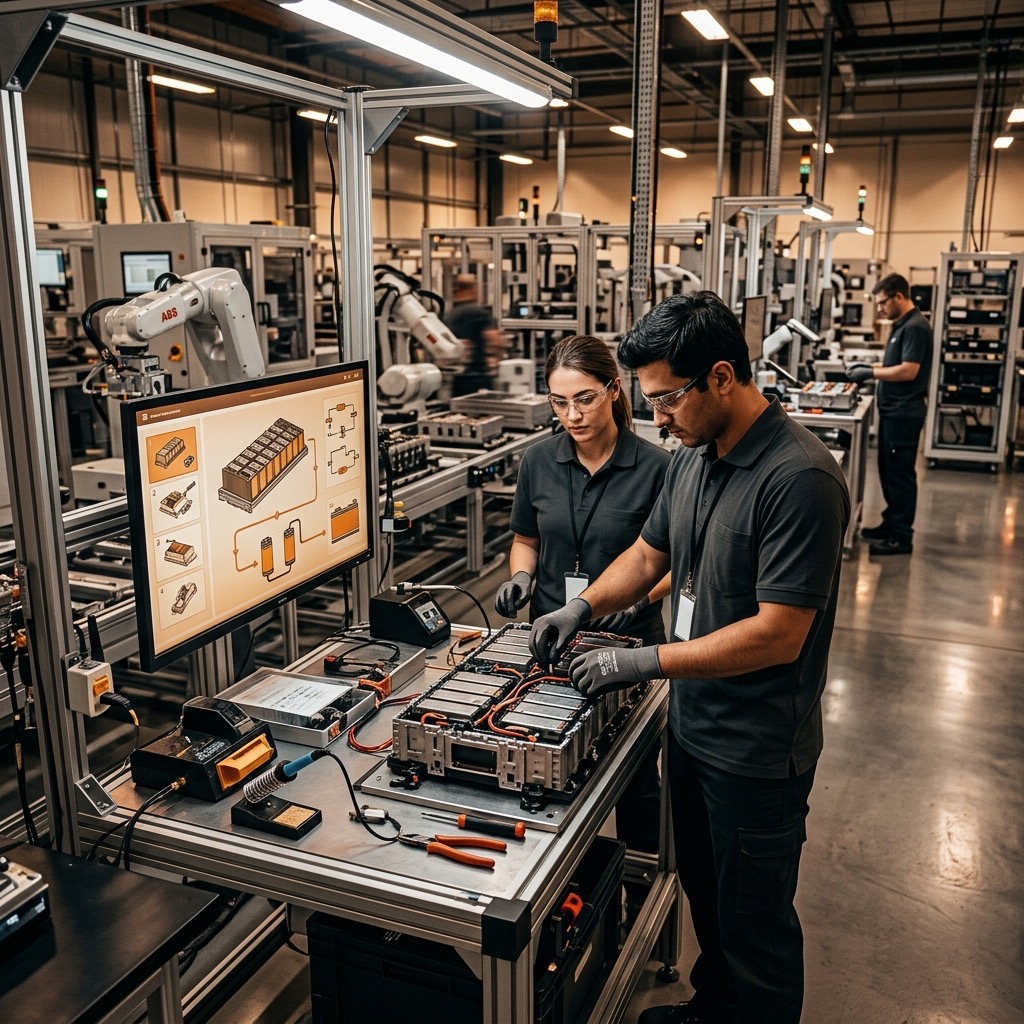
Battery manufacturing sits at the intersection of advanced manufacturing, electric vehicles, automation, clean energy, quality assurance, safety, logistics, and industrial engineering. Employers need workers who can operate in highly controlled production environments, understand process discipline, and adapt as production technology changes.
The skills gap is not only technical. Supervisors and line managers also need to understand safe operations, quality systems, shift handovers, traceability, and continuous improvement. A short unit can help employers upskill existing staff without waiting for a full apprenticeship cohort to complete.
Do not sell the headline before the specification
The announcement is a market signal. Providers should prepare employer conversations and delivery capability now, but final programme design should wait for the confirmed unit specification, funding, and assessment requirements.
What Providers Should Do Now
1. Map current capability. Identify whether your team already has tutors, assessors, or employer partners with battery, automotive, manufacturing, electronics, robotics, quality, or process-engineering experience.
2. Build an employer discovery script. Ask employers which roles need upskilling, which process areas are changing, what production risks are most material, and whether the need is entry-level, conversion, or supervisory.
3. Separate unit delivery from apprenticeship delivery. Do not assume OTJ tracking, KSB mapping, commitment statement workflows, and EPA gateway routines apply to the unit. They may not.
4. Prepare evidence templates. Short units still need evidence of participation, assessment, competence, employer agreement, and completion. The evidence model should be lighter than a full apprenticeship, but not informal.
Likely Employer Use Cases
- Conversion training: moving workers from adjacent manufacturing roles into battery production.
- Quality and safety upskilling: improving process discipline, traceability, and risk awareness.
- New line setup: preparing staff before a production line or facility goes live.
- Supervisor development: giving team leads enough technical understanding to manage production, escalation, and continuous improvement.
- Supply chain alignment: helping suppliers understand the quality and process expectations of battery manufacturing customers.
Platform Requirements for Unit Delivery
A short unit still needs a delivery system. Providers should be able to create a unit-specific programme, enrol learners quickly, capture employer context, track attendance or participation, record assessment evidence, issue completion records, and report outcomes.
The system also needs to support mixed portfolios. A single employer may use a battery manufacturing unit for existing workers, a full apprenticeship standard for new recruits, and commercial training for supervisors. If those records sit in separate spreadsheets, the provider loses the ability to show a coherent workforce development story.
Frequently Asked Questions
Is the battery unit a full apprenticeship? No. It is an apprenticeship unit, which is a shorter training product. Providers should wait for the confirmed specification before deciding which full apprenticeship processes apply.
Which employers should providers approach? Start with battery manufacturers, automotive supply chain employers, engineering firms, clean energy companies, logistics operations linked to battery supply chains, and colleges or providers with manufacturing employer boards.
What should a provider prepare first? Prepare the employer discovery model, delivery capability map, and evidence framework. Do not write final curriculum until the formal unit requirements are published.
Sources & further reading
- GOV.UK — New apprenticeship unit to supercharge battery manufacturing
- GOV.UK — Skills England
- GOV.UK — Apprenticeship funding rules