Last updated: 13 June 2026
Why AI Hardware Matters for Skills
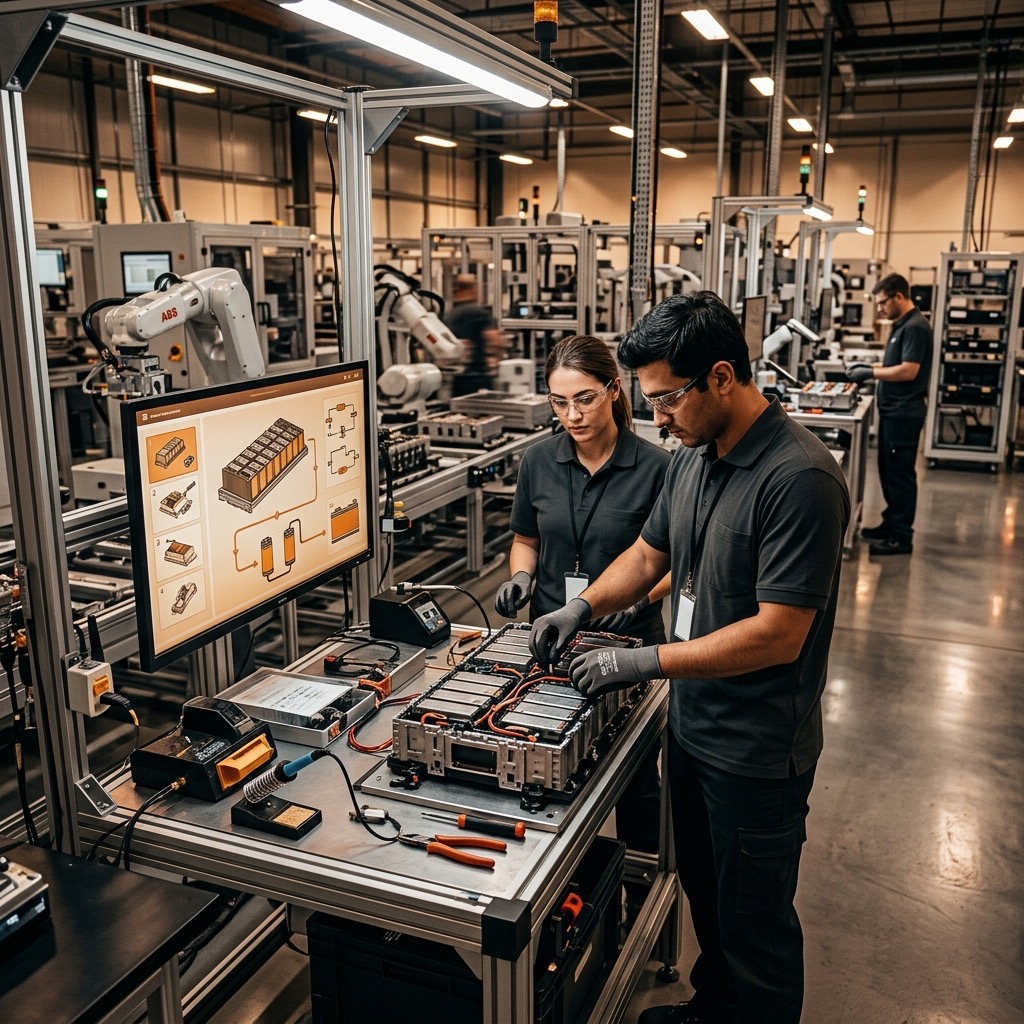
AI strategy is often discussed as if it were only a software issue. Models, apps, agents, and data science get most of the attention. But AI depends on physical infrastructure: compute, data centres, networking, power, cooling, security, manufacturing, maintenance, and specialist facilities.
That creates a different skills question. The UK does not only need more AI engineers. It also needs technicians and practical engineering capability to build, maintain, secure, and operate the infrastructure that AI requires.
Where Skills Demand Will Appear
- Data centre operations: facilities, cooling, power management, safety, monitoring, and maintenance.
- Networking and infrastructure: connectivity, cyber resilience, systems support, and uptime management.
- Electronics and semiconductors: manufacturing, testing, quality, cleanroom discipline, and process control.
- Energy and sustainability: power demand, grid connections, efficiency, and environmental controls.
- Project delivery: technical project management, procurement, supplier coordination, and compliance.
Which Apprenticeship Routes Fit?
The exact route depends on employer need, but relevant areas include engineering technician, maintenance and operations engineering, network engineering, digital support, cyber security, data centre operations, manufacturing, project management, and team leadership.
Apprenticeship units may also become important where employers need faster upskilling in a narrow skill area: data centre safety, semiconductor process basics, AI infrastructure maintenance, cooling systems, or battery and power systems.
AI infrastructure is a cross-sector skills problem
Do not leave it to digital teams alone. AI hardware demand touches engineering, manufacturing, energy, construction, facilities, cyber, procurement, and operations.
What Providers Should Do
1. Map local supply chains. Identify data centres, engineering firms, energy infrastructure, advanced manufacturers, electronics firms, and facilities employers in your region.
2. Build technician route bundles. Employers may need a mix of standards, units, short courses, and supervisor training rather than one programme.
3. Update employer discovery questions. Ask about equipment, uptime risk, maintenance model, supply chain pressure, recruitment gaps, and planned AI infrastructure projects.
4. Prepare evidence models. Technical training should capture practical competence, safety, quality, workplace validation, and manager sign-off.
A 90-Day Employer Plan
Days 1-30: identify AI infrastructure roles and adjacent roles likely to be affected by compute, data centre, automation, or manufacturing expansion.
Days 31-60: map skills gaps by task: maintenance, safety, diagnostics, networking, cyber, power, cooling, quality, supplier management, and team leadership.
Days 61-90: choose funded routes, provider partners, and evidence requirements for the first cohort or pilot group.
Frequently Asked Questions
Is this only relevant to large tech companies? No. Supply chain employers, facilities firms, engineering contractors, energy companies, and local manufacturers may all be affected.
Should providers wait for new standards? Not entirely. Existing standards may already cover many technician skills. Providers should map current routes first, then monitor new units and standards.
What should employers measure? Measure competence against tasks, safety compliance, downtime reduction, fault resolution, quality, manager validation, and progression into higher technical roles.
Sources & further reading
- ITPro — UK AI Hardware Plan, national supercomputer and semiconductors
- GOV.UK — AI Opportunities Action Plan
- GOV.UK — Skills England